
Choose by function first
Select the Right Curtain Fabric
A beautiful swatch can behave very differently at window scale. Compare light, privacy, weight, texture and care before deciding on color.
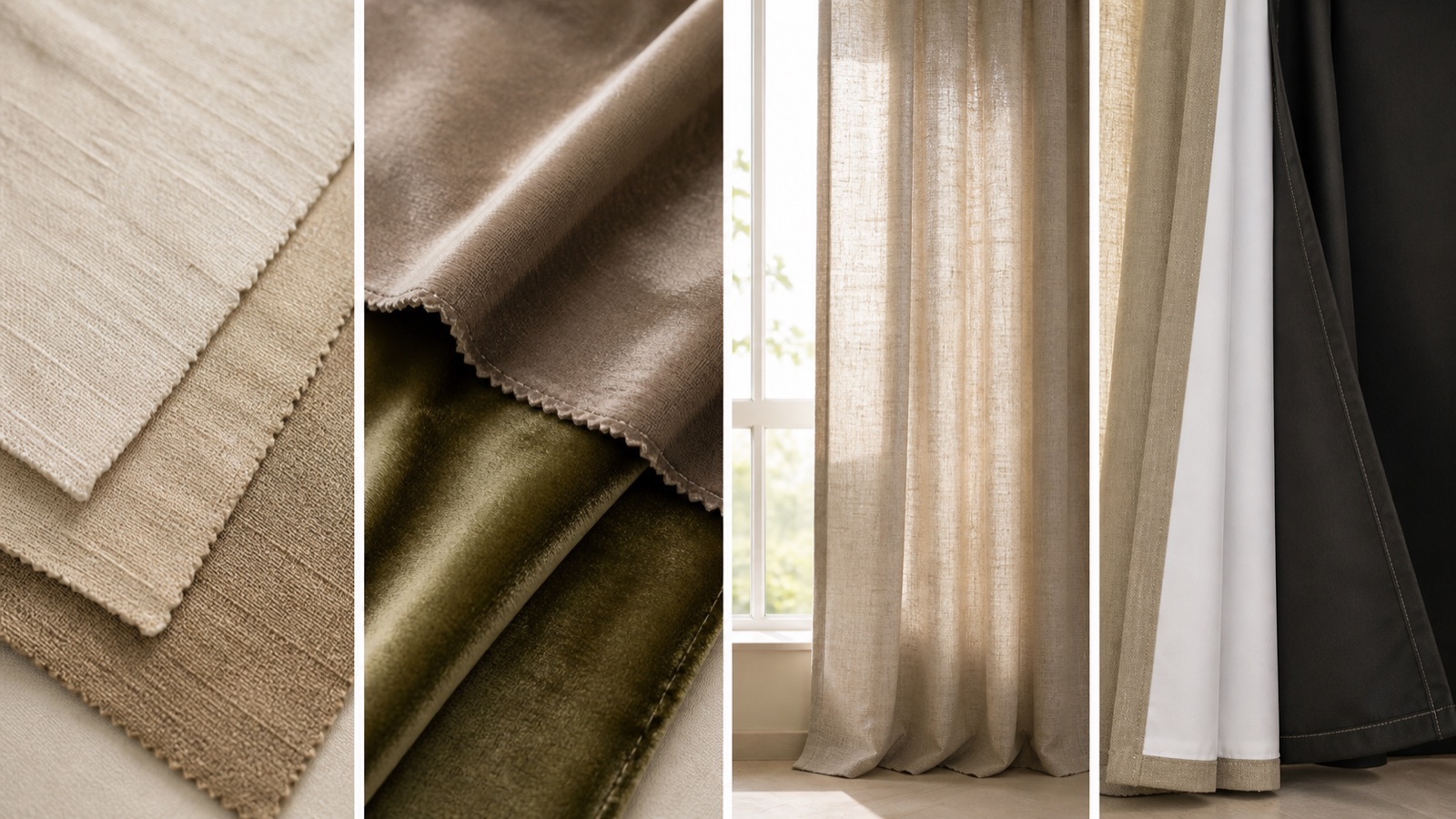
Compare real weave, pile, transmitted daylight and lining construction—not color alone.

Define the room requirement
- Daylight: preserve brightness, soften glare or darken the room?
- Privacy: daytime screening, nighttime privacy or both?
- Drape: airy movement or a structured tailored fall?
- Use: decorative, frequently opened, humid or high traffic?

Sheer / Open Weave
Softens daylight and adds texture, but usually does not provide reliable nighttime privacy.

Medium-Weight Woven
Balances body, movement and everyday privacy. Add a lining to change light control.

Heavy / Structured
Creates a fuller visual weight and larger stack. Confirm the rod and brackets can support it.
Use the sample correctly
View vertically
Hang the sample at the window instead of laying it flat.
Check day and night
Observe daylight, room lighting and exterior visibility.
Compare with fixed finishes
Hold it near flooring, paint, furniture and metal hardware.
Test with the lining
A lining can change color depth, hand and weight.

Understand seams on wide panels
Fabric rolls have a fixed usable width. Wide or long panels may require joined widths. A vertical seam is normal custom-drapery construction, not a defect. Seam position depends on fabric width, repeat, header and finished size.
Patterned fabric may require extra material to align the repeat. Ask support before ordering if an uninterrupted face is essential.