
Width without confusion
Fullness, Panels and Pleat Quantity
Fullness means fabric width compared with the finished coverage width. It changes fold depth—not the measured opening.
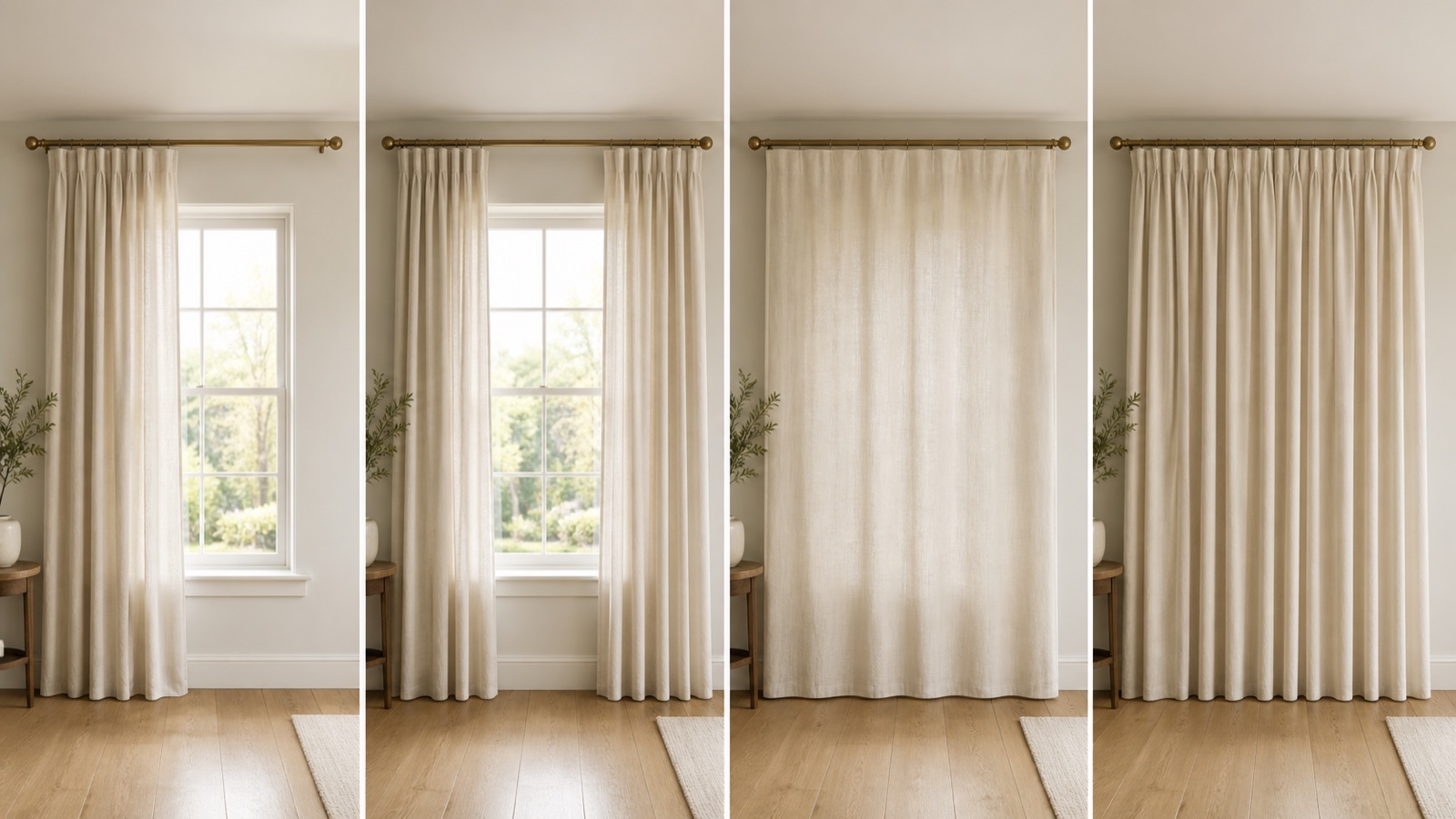
The same opening looks very different with one or two panels and with sparse or balanced fullness.

1.5×
Relaxed, lighter folds for a flatter look or heavier fabric.

2.0×
Balanced fold density for many flat or gathered draperies.

2.5×
Dense, luxurious folds; often effective for light sheers.
Worked example: 100-inch coverage width
- For a flat or gathered curtain at 2× fullness: 100 × 2 = 200 inches total fabric width.
- For a split pair: 200 ÷ 2 = 100 inches of flat fabric width per panel.
- For sewn pinch pleats or ripple fold, do not apply this calculation again; order the finished coverage required by that product and system.

Do not multiply finished width twice
For sewn pinch pleats, the maker uses extra fabric to form the pleats. The ordered finished width is normally the width the panel covers when the pleats are set.
Pleat count is a construction output based on finished width, return, overlap and pleat spacing. A planning estimate is finished width ÷ target pleat spacing, rounded to a whole, balanced layout; the workroom must confirm the final count.

Single or split
Single panel: draws to one side and needs all stack space there. Split pair: meets at center and stacks on both sides. For pairs, account for center overlap/closure and outside returns if the product or track uses them.